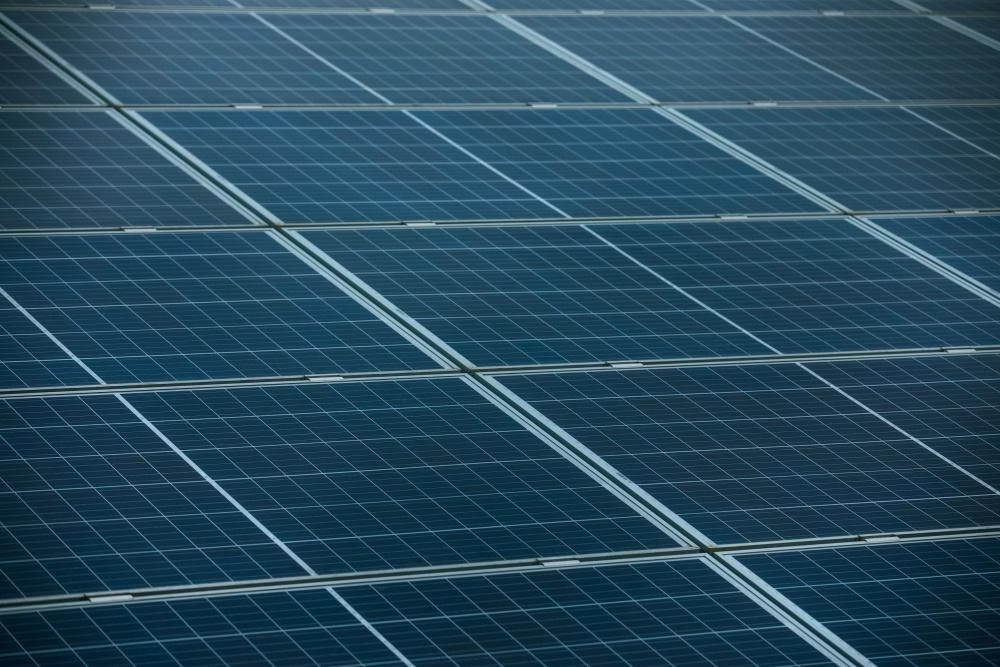
Every modern solar panel system comes with a monitoring app that shows how much electricity your panels are producing. And most landed homeowners probably check it keenly for the first fortnight, then never again.
Out of sight, out of mind, right?
With the roof being out of your sight, and the assumption that the rain will do all the work in keeping the solar panels clean, it’s easy to overlook the cleanliness of it. But as much as the rain helps, it does not finish the job. Dust, pollen, tree sap, and the occasional bird all settle on the glass and chip away at output.
12 to 18 months or more frequently, how often you need to clean your solar panels comes down to how much of that your roof collects.
How Often Should You Clean Solar Panels in Singapore?
Believe it or not, Singapore does not have a dust problem the way drier countries do. Our soiling is stickier and more organic, and it comes from a few main sources:
- Airborne particulates from traffic and nearby industry.
- Pollen and tree sap, worse near mature greenery.
- Bird droppings, the worst offender
Our roughly 167 rainy days a year wash the light stuff off. The stubborn material, sap and droppings baked on by the heat need a proper clean.
How often solar panels need to be cleaned then depends on your roof and what is present around it:
- Standard conditions, a well-tilted roof with no overhanging trees: Every 12 to 18 months.
- Near trees or overhanging branches: Every 6 to 12 months, since leaves, sap, and droppings collect faster.
- Near an active construction site: More often, because fine cement dust clings and rain does not wash it off.
- Flat or low-tilt roofs: More often, as they cannot self-clean and residue pools along the lower edge.
How to Know If Your Solar Panels Need to Be Cleaned?
Of course, you do not need to climb onto your roof to know when to clean solar panels. The signs are visible from the ground and from your phone:
- A drop on the monitoring app: A sudden localised fall in output against similar weather days in past years is the clearest signal.
- Marks you can see from afar: Visible dirt, streaks, or dark patches from droppings usually mean the panels are overdue for a clean.
- A creeping electricity bill: If your usage has not changed but the bill is climbing, reduced output is a likely culprit.
Bird Droppings: More Damaging Than Most Homeowners Expect
Of everything that ends up on a panel, bird droppings do the most damage.
Dust spreads thinly, so a panel loses a little light everywhere. A dropping does the opposite.
It sits as a thick, opaque blob and blocks sunlight from the solar cells beneath it completely. Those solar cells, the small squares across the panel, are wired together in a chain called a series. Because current runs through the whole chain, one heavily shaded solar cell can cut a panel’s output by 20 to 30% and drag down the panels wired to it.
Left there, it worsens.
The shaded cell heats into a hotspot, which over time causes permanent damage, and in bad cases harms the junction box, the sealed unit on the panel’s back where the wiring connects. Singapore’s heat bakes droppings onto the glass within days, making them harder to remove and more likely to stain for good.
Some neighbourhoods get it worse. The leafier landed districts, Bukit Timah, Holland, Tanglin, and stretches of the East Coast, come with mature trees, and mature trees come with birds that treat your roof as a hangout spot.
Safe Cleaning: What to Do, What to Avoid, and When to Call a Professional
So can you clean the panels yourself?
If they sit on a low single-storey extension you can reach safely from the ground, a quick rinse is fine. For most landed homes, though, the panels are on a pitched upper roof, and reaching them safely means harnesses, scaffolding, and training to work at height. However, going up with a garden hose and a ladder is how a Saturday chore turns into an A&E visit.
Access is only half the risk, though. The wrong brush or cleaning agent can scratch the anti-reflective coating, damage the junction box seals, or void the warranty. For panels within safe reach, a few rules keep both the solar panels intact:
- Never get onto the roof without proper safety equipment.
- Switch the solar panel system off at the isolator before you start.
- Clean only in the early morning or late afternoon, when the panels are cool. Cold water on hot glass causes thermal shock, which can crack it.
- Never step or put your weight on the panels. The micro-cracks it causes reduce performance permanently.
For anything you cannot reach safely from the ground, hand it over. When to call one in, and what to expect:
- Any rooftop system that cannot be safely reached from ground level.
- Professional solar panel cleaning in Singapore typically costs S$200 to S$800 a session, depending on roof access, scaffolding, cleaning needs, and roof type.
- FOMO Energy provides professional cleaning and maintenance for landed homeowners across Singapore. You can see the solar panel cleaning service here.
What a Full Annual Inspection Covers