If you’ve been shopping for solar in Singapore, you’ve likely been hit with the term “kWp” more often than a Grab driver hits you with his life story—it’s everywhere, a little overwhelming, and usually starts before you’ve even turned onto the CTE.
In simple terms, the meaning of Kilowatt-peak (kWp) is the maximum power output a system can achieve under perfect laboratory conditions—basically, your solar panels’ “personal best” sprint.
For homeowners and SMEs, understanding this number is the difference between installing a system that actually covers your air-con habit and one that leaves you sweating when the SP bill arrives. It’s the benchmark that helps us size up your roof’s potential before the tropical sun starts doing its heavy lifting.
What is the Difference Between kWh and kWp?
Confusing these two is like mistaking the size of your car’s fuel tank for the speed on the speedometer—both are important, but they tell very different stories about your journey. To keep it simple: one is the “potential” of your car’s engine, and the other is the actual “mileage” you’ve clocked on the road.
Feature
Kilowatt-peak (kWp)
Kilowatt-hour (kWh)
Definition
The maximum theoretical power output of a system.
The actual amount of energy consumed or generated over time.
Units
Measurement of capacity or power.
Measurement of energy volume.
Factors Affecting
Panel efficiency, surface area, and hardware quality.
Weather, shading, and how long you blast the AC.
Practical Use
Used to size your system and calculate ROI.
Used by SP Group to determine your monthly savings.
Why kWp Matters?
Before you commit to solar panels, you need to know if your system is a lean, mean, green machine or just a fancy roof ornament. To put it simply, 1 well-optimised system is worth many poorly planned ones, and here’s why that specific kW capacity is the hero of your setup:
Accurate Savings Forecasts: We use kWp to estimate your monthly offset; a higher peak rating generally means more credits back from the grid.
System Comparisons: It’s the “fair fight” metric that lets you compare different panel brands side-by-side to see which one gives you more bang for your buck.
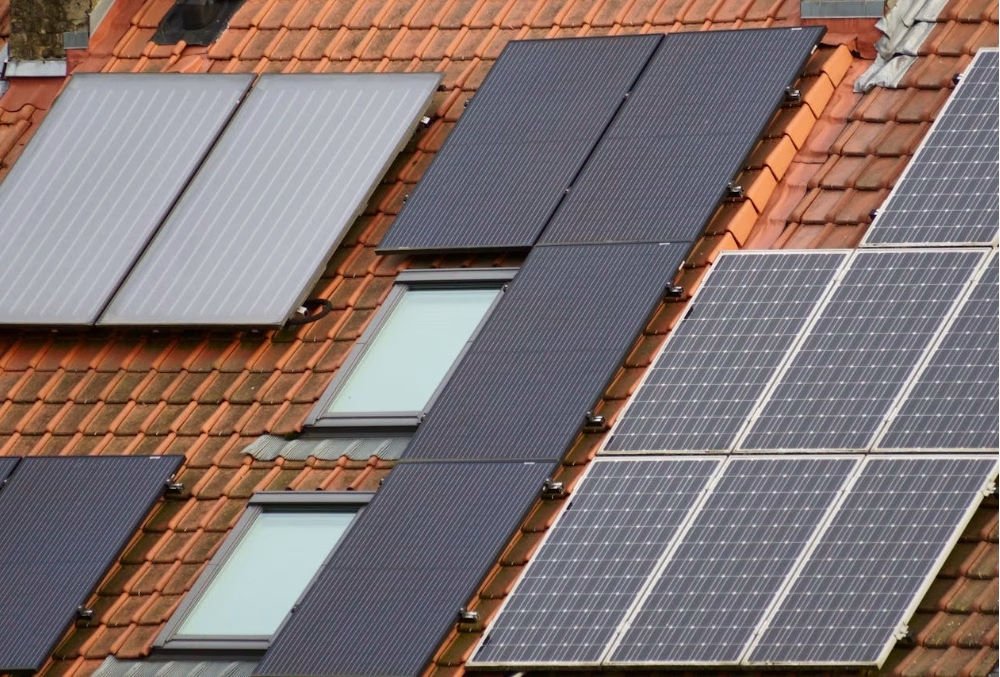
Tailored System Sizing: It ensures your system is “just right” for your roof’s footprint, so you aren’t paying for more capacity than your terrace house can actually hold. This is especially crucial when planning a residential solar panel setup, where your roof space is more precious than a prime parking spot in Orchard Road—you want to maximise every inch without over-investing in hardware your terrace house can’t accommodate.
Grid Compliance: The SP Group has rules about how much energy you can feed back; knowing your peak capacity keeps you on the right side of the local regulations.
How is kWp Calculated?
Calculating your potential energy output is actually quite logical once you break down the physical space you’re working with.
Identify Total Solar Panel Area (a): This is the total square footage of your roof that will actually be covered by panels—the more “real estate” you give us, the more sun we can catch.
Determine Solar Panel Yield (r): Not all panels are created equal; this percentage represents how efficiently a single panel converts sunlight into actual electricity.
Calculate kWp: By multiplying your area by the yield (and the standard light intensity), we get your peak capacity—the “gold standard” number that defines your system’s strength.
Your Roof Is Calling (And It’s Not About A Leak)
At the end of the day, kWp is just a label on a box until it’s actually sitting on your roof, quietly chipping away at your overheads while you’re out grabbing a kopi. Instead of letting those numbers stay stuck in a manual, we turn that peak potential into actual monthly breathing room.
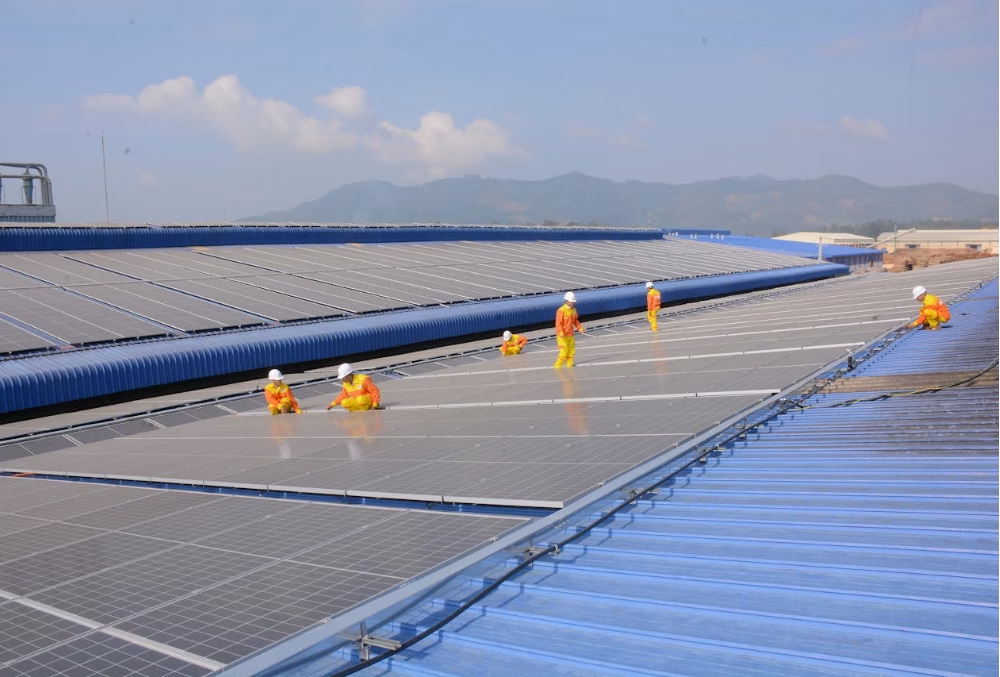
At FOMO Energy, we handle the heavy math and the “peak” technicalities so you can focus on the much more important task of deciding what to do with that extra cash in your bank account. Whether you’re looking at residential-scale arrays or a commercial solar panel setup, we have the expertise to ensure your roof stops being a passive bystander.